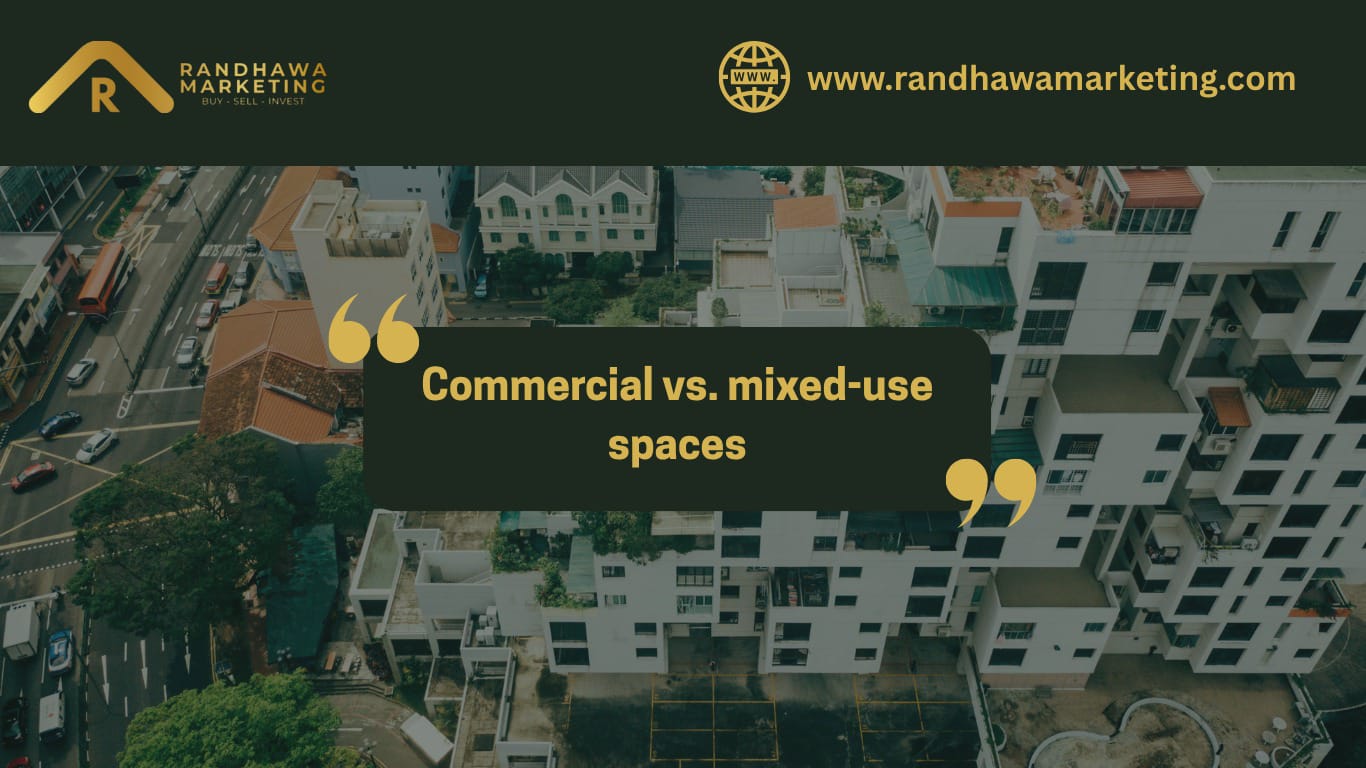
Commercial
Real Estate and Mixed-Use Projects
As urban areas
continue to grow and lifestyles change, the need for smart and efficient Real
Estate solutions becomes more important than ever. Among the most conspicuous
and widely discussed types of Real Estate today are Commercial Real Estate and
Mixed-Use Spaces. Both play a vital role in shaping modern urban areas, though
they serve different functions and meet varied community needs.
Key Difference
Commercial Real Estate is focused only on
business use.
Mixed-Use spaces combine business and
residential.
COMMERCIAL REAL ESTATE
Commercial
Real Estate refers to any property that is specifically used for business
purposes either through rental income, capital gain, or business activity.
Commercial Real Estate includes properties used for business or
income-generating purposes, not for residential living. Commercial Real Estate
has emerged as one of the most dynamic and influential sectors in economy. The
primary goal of commercial real estate is to provide functional spaces for
businesses while offering rental income or long-term value growth for
investors. These properties serve as essential framework for commercial
activities and come in various forms:
Office
Spaces –
High rise buildings, corporate towers, business centers, co-working spaces
Retail
Spaces –showrooms,
shopping malls, supermarkets, and local markets
Industrial
Facilities –
warehouses, factories, and storage units
Hospitality
Projects –
hotels, motels, and resorts Commercial plots – land allocated for future
business development
Commercial
Plots-land
allocated for future business development
Why Invest in Commercial Real Estate
Investing in
Commercial Real Estate comes with several strong advantages, making it a smart
choice for both individual and institutional investors. One of the biggest
reasons people choose it is the potential for higher rental income especially
in busy business areas where demand is strong. Commercial leases usually last
for several years, which mean steady and reliable income over time. Plus, as
cities grow and develop, the value of commercial properties often rises, giving
investors a chance to earn solid profits in the long run. It also helps protect
against inflation, since rental rates and property values tend to go up with
rising costs. Whether its office buildings, retail shops, or mixed-use
developments, commercial Real Estate offers a great way to grow your money and
build long-term value growth for investors.
Mixed-Used Spaces
Mixed-Use
spaces refer to buildings or developments that combine multiple types of land
uses typically residential, commercial, office, recreational, and sometimes
even institutional all within the same area. These spaces are thoughtfully
planned to promote easy access, reduce travel time, and create dynamic,
all-in-one communities. Here’s a detailed breakdown of the types of Mixed-Use
Real Estate.
1. Vertical Mixed-Use Development
Different
functions are uses within a single building. A ground floor with shops and
restaurants, office spaces on middle floors, and apartments on upper floors.
2.
Horizontal Mixed-Use Development
Different
buildings serving different purposes, located in the same area or block. A
neighborhood with retail outlets, office buildings, a park, and housing all
within walking distance.
3.
Live-Work Spaces
Buildings or
units designed for people to both live and run their businesses or offices.
Freelancers,
startups, artists, and remote workers running their businesses in same unit.
4.
Transit-Oriented Mixed-Use
Developments
located near public transit systems like metro stations or bus terminals and
airports. Housing and retail complexes near a metro line with shared access to
green spaces and bike lanes
5.
Mixed-Use Lifestyle Centers
These Real
Estate developments focused on shopping, entertainment, gathering, dining, and
living. Often includes cinemas, hotels, gyms, and high-end apartments.
6.
Institutional Mixed-Use Developments
Combines
educational, medical, or government facilities with other real estate types. A
college or university campus that includes student housing, cafes, retail
stores, and clinics.
Benefits of Commercial Real Estate & Mixed Used Spaces
Commercial and
Mixed-Use Real Estate developments offer a powerful combination of economic and
lifestyle advantage. Commercial Real Estate offers reliable income through
long-term leases, higher rental yields, and steady demand from business
tenants.
Furthermore,
Commercial Real Estate often appreciates in value over time, particularly in
developing urban areas. Investors also benefit from several tax deductions on
mortgage interest, depreciation, and operational cost. With the ability to
actively manage the property, improve spaces, and adjust rental terms, owners
have greater control over profitability.
Lastly, Commercial Real Estate can serve as a
reliable hedge against inflation, as rental rates typically raise along with
market trends. At the same time, Mixed-Use Real Estate brings together the best
of city living homes, businesses, and leisure spaces into one well-planned
area. This kind of development makes daily life more convenient people can live
close to where they work, shop, and relax, which means less time stuck in
traffic and more time for what matters. It also helps local businesses by
creating steady foot traffic and a built-in community of customers.
These spaces
often become lively, social hubs that strengthen neighborhood connections and
raise property values. Furthermore, since they don’t rely on just one type of
tenant, mixed-use developments are often more secure during economic ups and downs.
These property types improve the functionality of available land, strengthen
local economies, and enhance community interaction. That’s why they’re becoming
a smart choice for developers, investors, and planners looking for both profit
and long-term impact.
CONCLUSSION
Both Commercial Real Estate and Mixed-Use developments play a
significant role in modern urban planning. While Commercial Real Estate is ideal for investment and business growth,
Mixed-Use spaces reflect the future
of smart, convenient living. Commercial properties offer steady rental income,
long-term leases, and strong demand from businesses making them a dependable
choice for investors.
On the other
hand, Mixed-Use spaces bring homes,
shops, offices, and recreational areas together in one place, making daily life
more convenient and connected. When combined, these two types of Real Estate don’t just create
profitable opportunities they help shape communities that are more livable,
efficient, and sustainable. Mixed-use developments add energy and convenience, as
cities continue to grow; mixed use projects are becoming essential for those
who seek modern life style all in one places. While commercial spaces bring
economic strength and stability.
Together, they
allow developers, investors, and planners to build spaces that meet the needs
of both people and businesses. Commercial
Real Estate and Mixed-Use project
they form the foundation for shaping urban spaces that are both economically
strong and socially vibrant.